
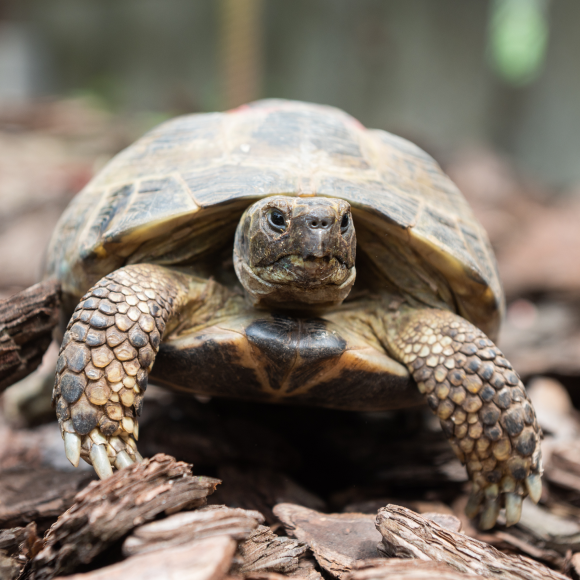
Tortoises
Tortoises come from desert to tropical and some warmer temperate climates. The species and its range determine the environment you'll need to replicate. With proper care, tortoises can live over 100 years in captivity. Some species never grow larger than a grapefruit; others get bigger than a wheelbarrow.
temperature
Establish a gradient from 100°F on the hot side to 75°–80°F on the cool end. Maintain both at all times with lights and heat pads.
WATER & HUMIDITY
Tropical tortoises: offer a small, shallow water bowl and mist lightly once a day. Desert tortoises: no standing water in the habitat. Soak all baby tortoises in very shallow tepid water for about 30 minutes once a day; soak adults about once a week.
shelter & cage size
Provide a hide spot on the hot side big enough for your tortoise to fit under.
Enclosure size: babies can start in smaller enclosures, but even the smallest species needs the floor space of a 40-gallon aquarium. The bigger, the better.
SUBSTRATE
Desert species: screened pine shavings or dry peat moss.
Tropical species: damp peat moss or Carefresh bedding.
DIET & feeding
Desert species eat mostly (95%) dark leafy greens, grasses and other legumes: baby greens, spring mix, dandelion greens, romaine, alfalfa sprouts. Variety matters. Fruit and other occasional foods make up the remaining 5%. Tropical species take a little less greens (75%) and a little more fruit and protein (25%), with a balanced protein once or twice a month.
Feed babies daily and adults no less than every other day.
supplements
Lightly dust all food with a 50/50 mix of calcium and multivitamins at every feeding. Without them, tortoises can develop vitamin or calcium deficiencies that can be fatal.
LIGHTING
Full-spectrum fluorescent light for 10 to 14 hours a day. It simulates sunlight, aids metabolism of key vitamins and minerals, stimulates appetite and breeding behavior, and brings out color and activity. Mercury vapor bulbs and time outdoors in natural sunlight are great health boosts. A thermostat adds safety and saves power.
medical concerns
The first sign of an unhealthy tortoise is a lack of appetite. Check enclosure temperatures first.
Other signs: eyes that won't or can't open, a bubbly nose and light weight. If the setup is right and problems persist, call us.
LIGHTING OPTION 1
.png)
FAQ
How often should I clean the enclosure?
Spot clean messes and uneaten food daily. Clean the whole enclosure and change the bedding about every other week, or as needed.
Can my tortoise live outdoors?
Time outside in good weather is a great idea. Make sure the animal is fenced in with access to both full sun and deep shade, and that no toxic plants are within reach.