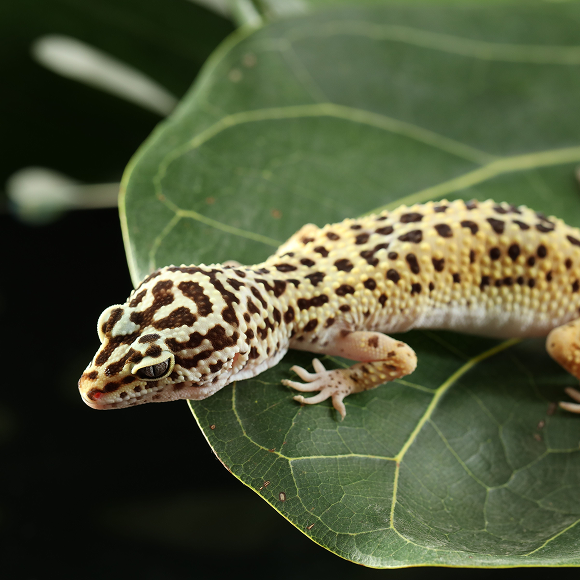
Leopard Gecko & Fat-tail Gecko
Eublepharis macularius (leopard gecko); Hemitheconyx caudicinctus (fat-tail gecko)
This is a very general care sheet. We strongly recommend gathering as much information as possible on captive husbandry for your specific species of gecko: other keepers in online groups and forums, care sheets, books and YouTube videos.
temperature
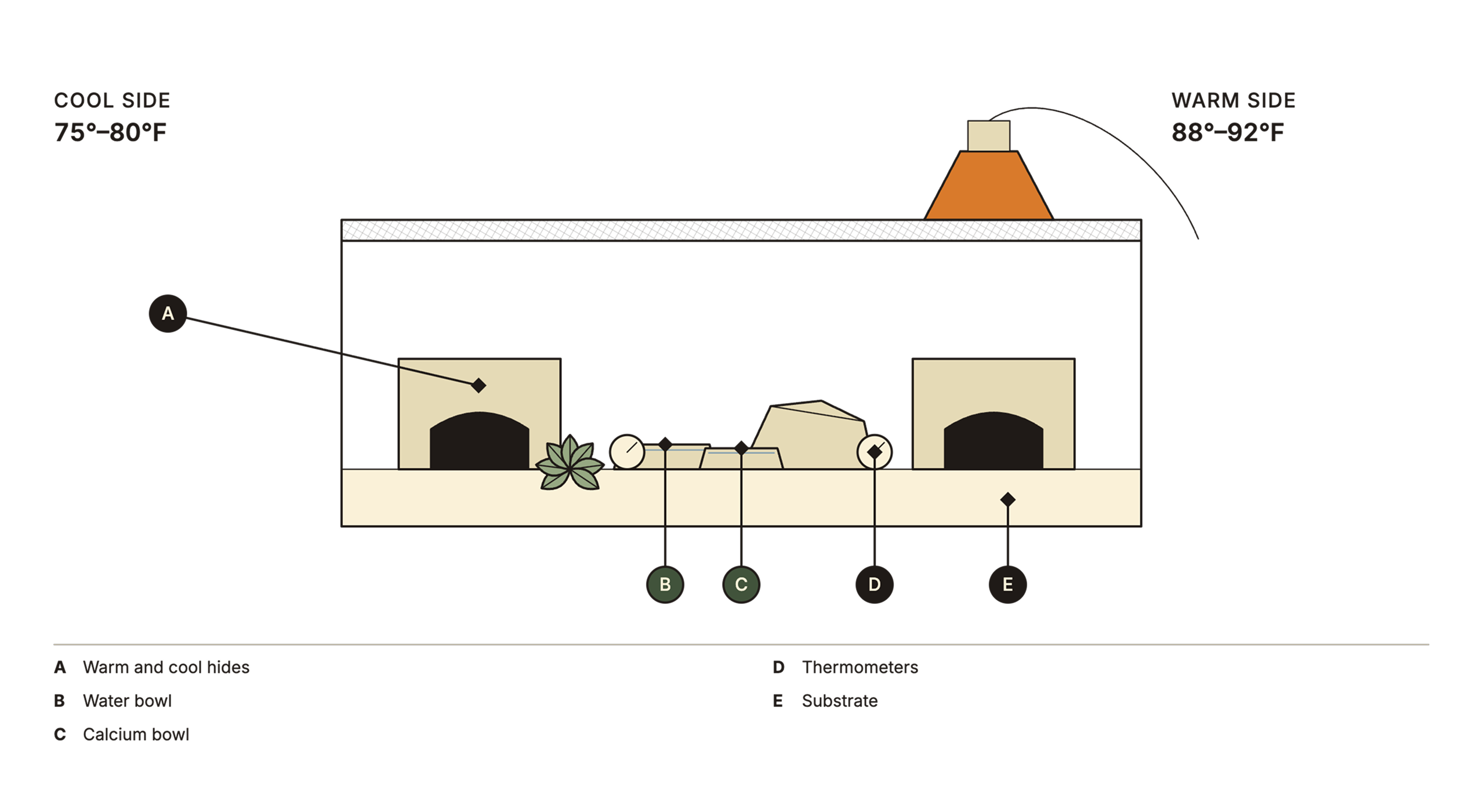
Hot side: 88°–92°F. Cool side: 78°–81°F. Evening: 73°–77°F. Thermometer on the ground, not the wall.
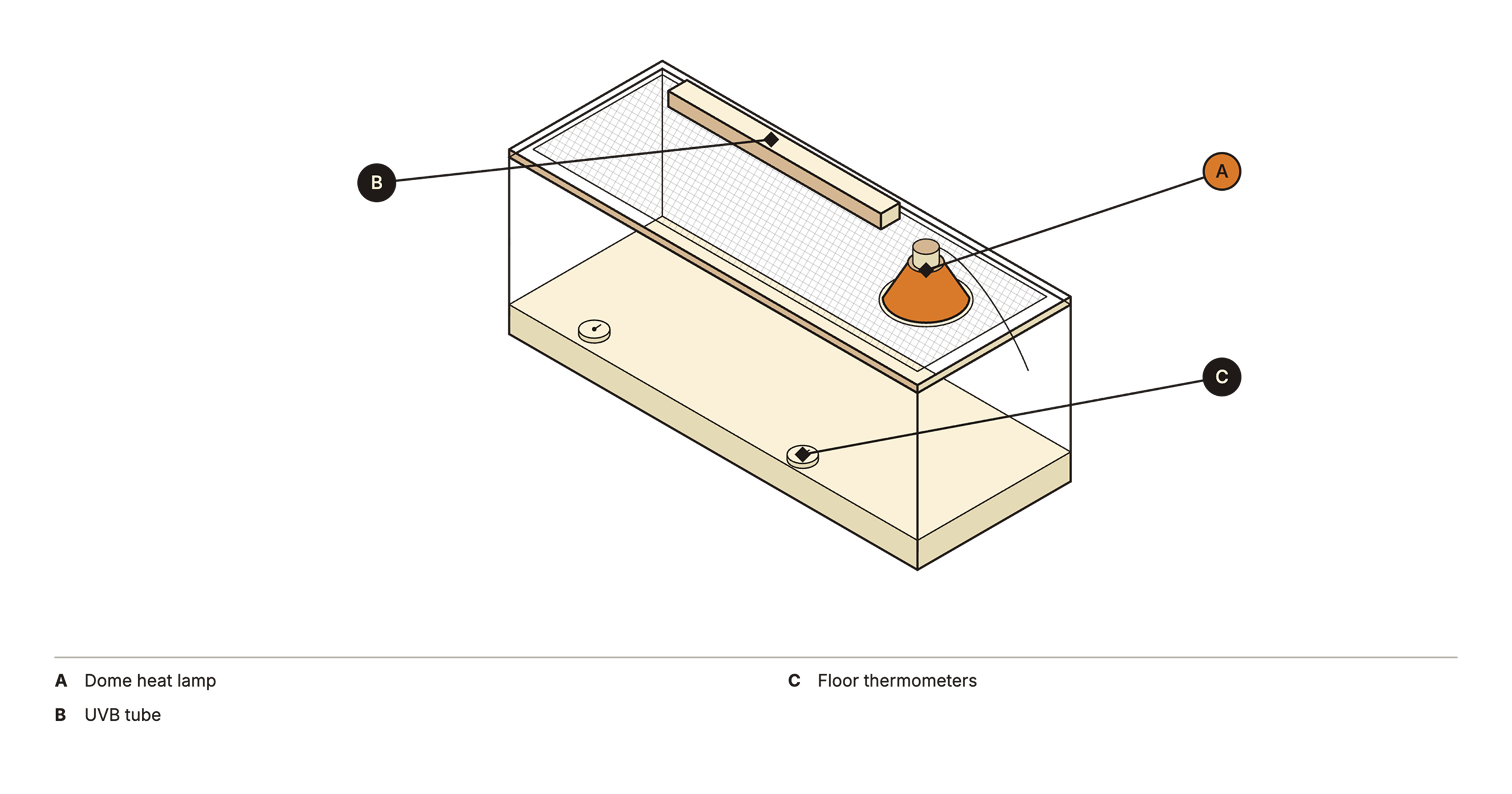
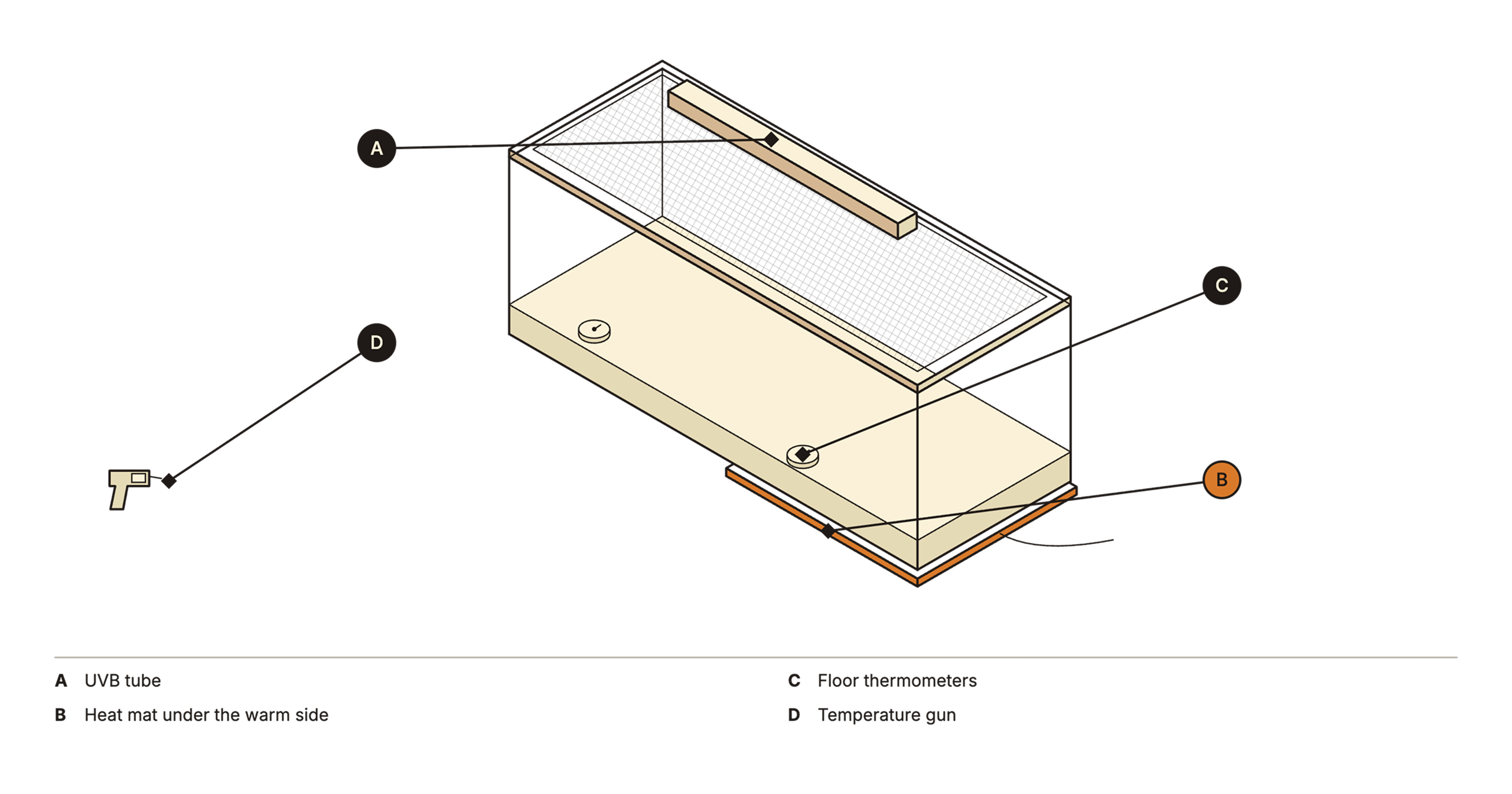
Keep thermometers on both the hot and cool side of the enclosure at all times. We strongly recommend a min/max thermometer on the cool side so you can monitor overnight temperatures.
If the enclosure drops below these temperatures, the gecko may start to brumate (hibernate) and stop eating; it thinks winter is coming.
WATER & HUMIDITY
Keep a small water dish on the cool side at all times. Add a small rock that sticks up above the water so feeder insects don't drown and foul the dish. Replace the water 2 to 3 times a week.
Humid hides are a must: stuff moistened moss or eco-earth into the hide to promote proper shedding, and check it 3 to 5 times a week to make sure it's still humid. Depending on the substrate (Eco Earth, Repti-Soil or Bio-Active Supply mixes), you can also spray larger areas of the enclosure to raise humidity outside the hide.
shelter & cage size
A hide on both the hot and cool side, and both should be humid hides. Big enough for the animal to fit inside, small enough to feel secure.
Baby/juvenile: floor space of 20 by 10 inches (10 gallon).
Adult: 30 by 12 inches minimum (20 gallon long); preferred 36 by 18 inches (40 gallon long).
SUBSTRATE
Keep baby geckos on paper towels or newspaper until they're at least 5 inches long to avoid impaction. From 5 inches up, loose substrate is fine: Repti-Soil and Bio-Active Supply formulas, which can be mixed with play sand or Repti Sand. We do not recommend a sand-only substrate.
Impaction typically happens when a reptile isn't getting enough calcium and vitamins; it goes looking for minerals in its environment and eats the bedding. Improper temperatures also play a large part.
general info
Leopard geckos come from arid, mountainous deserts, mostly rocky outcrops.
Fat-tail geckos come from savannah and woodland habitats, often sheltering in termite mounds. Both species reach 8 to 10 inches.
These are terrestrial geckos that can't climb glass the way many geckos can, so floor space matters far more than height.
Both usually pick a favorite corner for their droppings.
DIET & feeding
Both geckos eat crickets, Dubia roaches, mealworms, king mealworms, hornworms, waxworms and other small insects; crickets and roaches make up the bulk of the diet. Insects should be narrower than the gap between the gecko's eyes or they're a choking hazard. Gut-load all feeders by feeding them healthy items for 24 hours before offering them.
Baby/juvenile: 4 to 5 times a week.
Adult: 2-3 times a week
supplements
Even gut-loaded insects can't match a wild gecko's diet, so supplement with a calcium + D3 supplement and a multivitamin. Keep a small dish of calcium in the enclosure at all times and dust the feeders regularly with the multivitamin.
LIGHTING
UV lighting isn't required for leopard or fat-tail geckos, but we encourage offering it when possible; a 5.0 UV bulb or lower is more than sufficient. If offered, run it 12 hours on, 12 hours off. Geckos are nocturnal and typically hunt at night.
medical concerns
EastBayVivarium.com has several Bay Area reptile vets listed, a nationwide reptile vet search and emergency vet information if your animal is having a medical issue.
Top Heat
Bottom Heat
Inside Enclosure