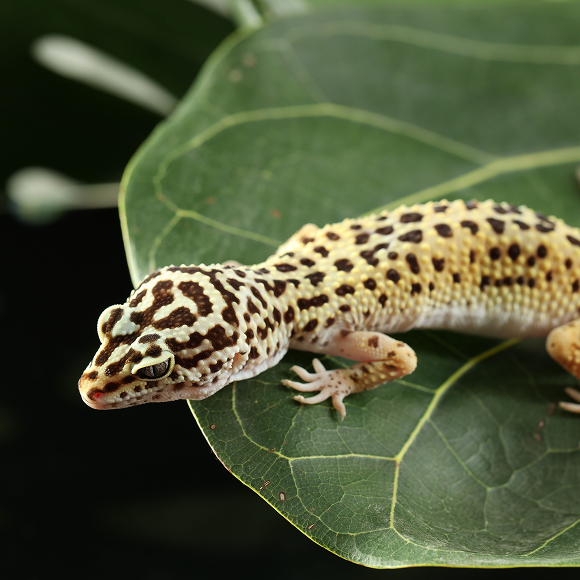
Leopard Gecko
Eublepharis macularius
Leopard geckos are a crepuscular, terrestrial lizard native to semi-desert and arid grassland areas of Afghanistan, Pakistan, India, and Nepal.
temperature
Reptiles are cold blooded - they must utilize their environment to properly regulate their body temperature. It is critical that captive reptiles are able to both warm up, and escape the heat as they wish.
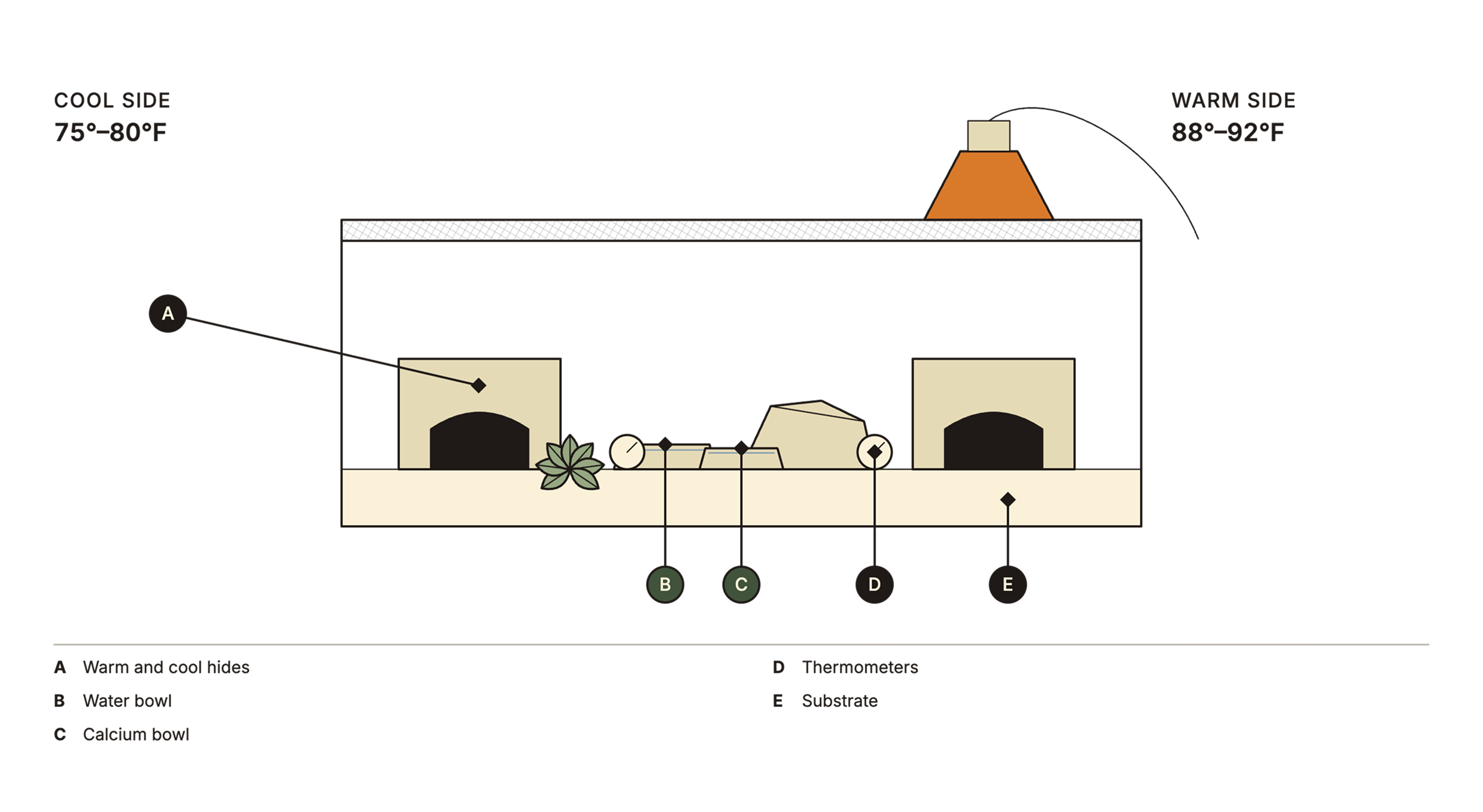
Hot side: 88°–92°F. Cool side: 78°–81°F. Night: 73°–77°F. The thermometer should be on the ground (where the snake is!), not the wall.
Keep thermometers on both the hot and cool side of the enclosure at all times. We strongly recommend a min/max thermometer on the cool side so you can monitor how cold overnight temperatures are getting.
If cool-side or night-time temperatures drop too low, your gecko may start to refuse food.
WATER & HUMIDITY
Keep a small water dish on the cool side at all times. Add a small rock that sticks up above the water so feeder insects don't drown and foul the dish. Replace the water daily.
Provide a "humid hide" for your leopard gecko. A humid hide is an enclosed space (hide box, Tupperware container, etc.) with a snake-sized entry point filled with a damp substrate, often sphagnum moss. This allows you to offer your gecko amoist microclimate without overly saturating the entire enclosure. yoYu can also spray larger areas of the enclosure to raise humidity outside the hide, but be careful not to flood the enclosure.
Enclosure
Provide a minimum of two tight-fitting hides; one on the warm side and one on the cold side. Other mindfully placed decor may be used to make the enclosure aesthetically pleasing and enriching for the snake.
Enclosures made from PVC, wood, melamine, and standard glass 'aquarium-style' can all be good options so long as environmental requirements are met. Solid top enclosures are useful in that they retain heat and/or humidity; if using a screen top enclosure, consider covering up the mesh to prevent heat and moisture loss. Enclosures must be escape-proof: secure screen tops with reptile cage clips and put the drop pin in sliding tops.
Baby/juvenile: floor space of 20 by 10 inches (10 gallon).
Adult: 30 by 12 inches minimum (20 gallon long); preferred 36 by 18 inches (40 gallon long).
Substrate and Decor
Keep baby geckos on paper towels or newspaper until they're at least 5 inches long to avoid accidental ingestion of substrate. From 5 inches up, loose substrate may be used.
Repti-Soil, coco coir, or other similar soils can be mixed with play sand or Repti Sand. We do not recommend a sand-only substrate.
general info
Leopard geckos average 7-10 inches in total length. In captivity, leopard geckos can be quite long lived, it is not uncommon for them to live 15-20 years with good care. Leopard geckos are insectivorous, and they are not able to climb vertical surfaces the way other geckos can. The leopard gecko is often docile and inquisitive, making them one of the most popular pet lizards.
DIET & feeding
Leopard geckos are insectivore. Offer calcium and vitamin dusted crickets, dubia roaches, mealworms, king mealworms, hornworms, waxworms and other small insects; crickets and roaches make up the bulk of the diet. Insects should be narrower than the gap between the gecko's eyes or they're a choking hazard.
Baby/juvenile: 4 to 5 times a week.
Adult: 2-3 times a week
supplements
Feeders should be dusted with a calcium + D3 supplement and a multivitamin. Keep a small dish of calcium in the enclosure at all times and dust the feeders regularly with the multivitamin.
LIGHTING
Regulate your gecko's day/night cycle using lighting on a timer. For regular care, a 12 hours on, 12 hours off light cycle works well for most species.
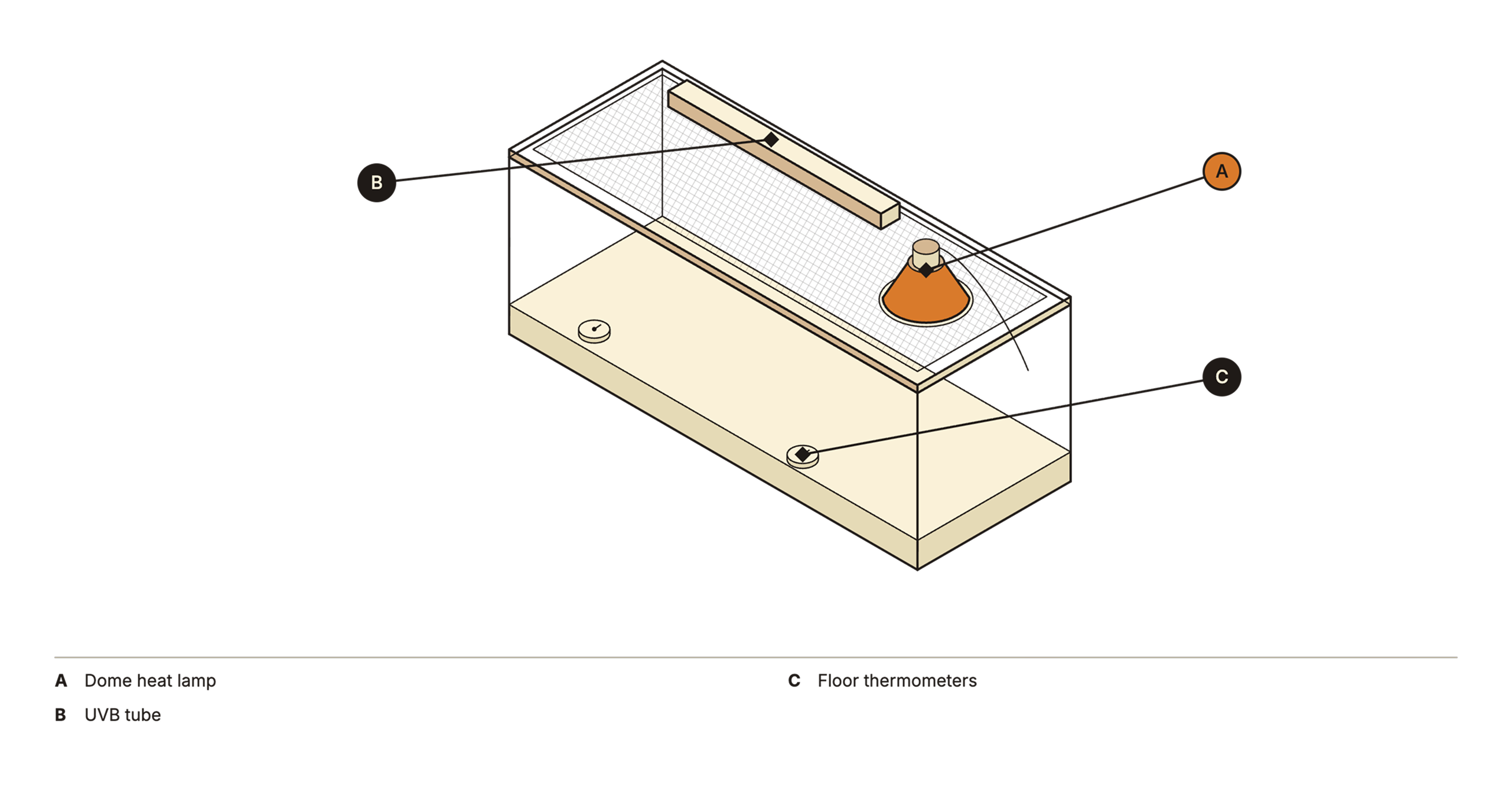
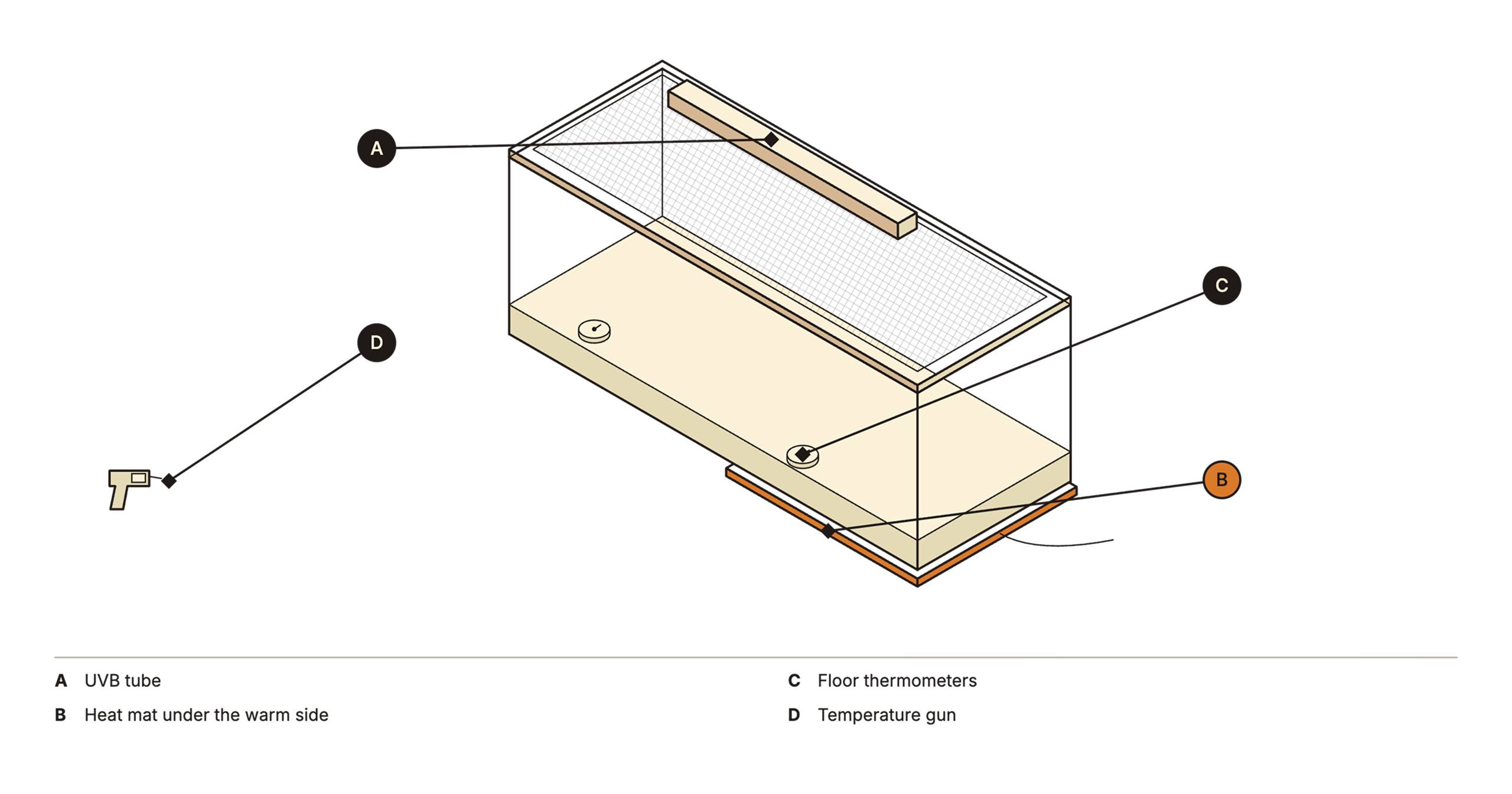
While UVB lighting is not required for leopard geckos to survive, there is growing evidence that exposure to UVB lighting may be beneficial for their health. If you choose to offer UVB, it should be offered as a gradient similar to heat so that the gecko can regulate its exposure as it desires.
medical concerns
EastBayVivarium.com has several Bay Area reptile vets listed, a nationwide reptile vet search and emergency vet information if your animal is having a medical issue.
Top Heat
Bottom Heat
Inside Enclosure