
.png)
Jumping Spiders
regal jumping spiders, desert jumping spiders and more.
This is a very general care sheet. We strongly recommend gathering as much information as possible on captive husbandry for your specific species of spider: other keepers in online groups and forums, care sheets, books and YouTube videos.
temperature
Ambient temperature: 70°–75°F.
Place the thermometer in the middle of the enclosure near the top, where your spider spends most of its time.
WATER & HUMIDITY
Jumping spiders prefer to drink droplets off leaves and surfaces, as they do in the wild. Mist a section of the enclosure with a fine mister twice daily.
shelter & cage size
You can provide a small hide, attached to the side of the enclosure since they rarely spend time on the ground. Filling the enclosure with decor also creates hiding places and helps them move through the whole space and hunt.
Baby/juvenile: 9 inches tall.
Adult: 12 inches tall.
Too large an enclosure and the spider may have trouble finding its own food. It must also be escape-proof: they fit through surprisingly small gaps, so use an enclosure made for jumping spiders or close off any gap the carapace can fit through.
SUBSTRATE
Many options work, including Repti-Soil, Bio Active Supply substrates, Forest Floor, Eco Earth and more.
DIET & feeding
Baby/juvenile: pinhead crickets or fruit flies.
Juvenile to sub-adult: 1- to 2-week-old crickets or insects of similar size.
Adults: house flies, green and blue bottle flies, small crickets, red runners, small mealworms or wax worms. Don't leave crickets or mealworms in the enclosure too long; they have a nasty bite.
Feed every 3 days.
Jumping spiders are known to go without eating for as long as 20 days. If yours isn't eating, it may be about to molt, or the enclosure may not get enough light during the day.
LIGHTING
For daytime lighting: 12 hours on, 12 hours off.
A jumping spider hunts by sight, so daylight is essential for feeding.
medical concerns
EastBayVivarium.com has several Bay Area reptile vets listed, a nationwide reptile vet search and emergency vet information if your animal is having a medical issue.
heat & light
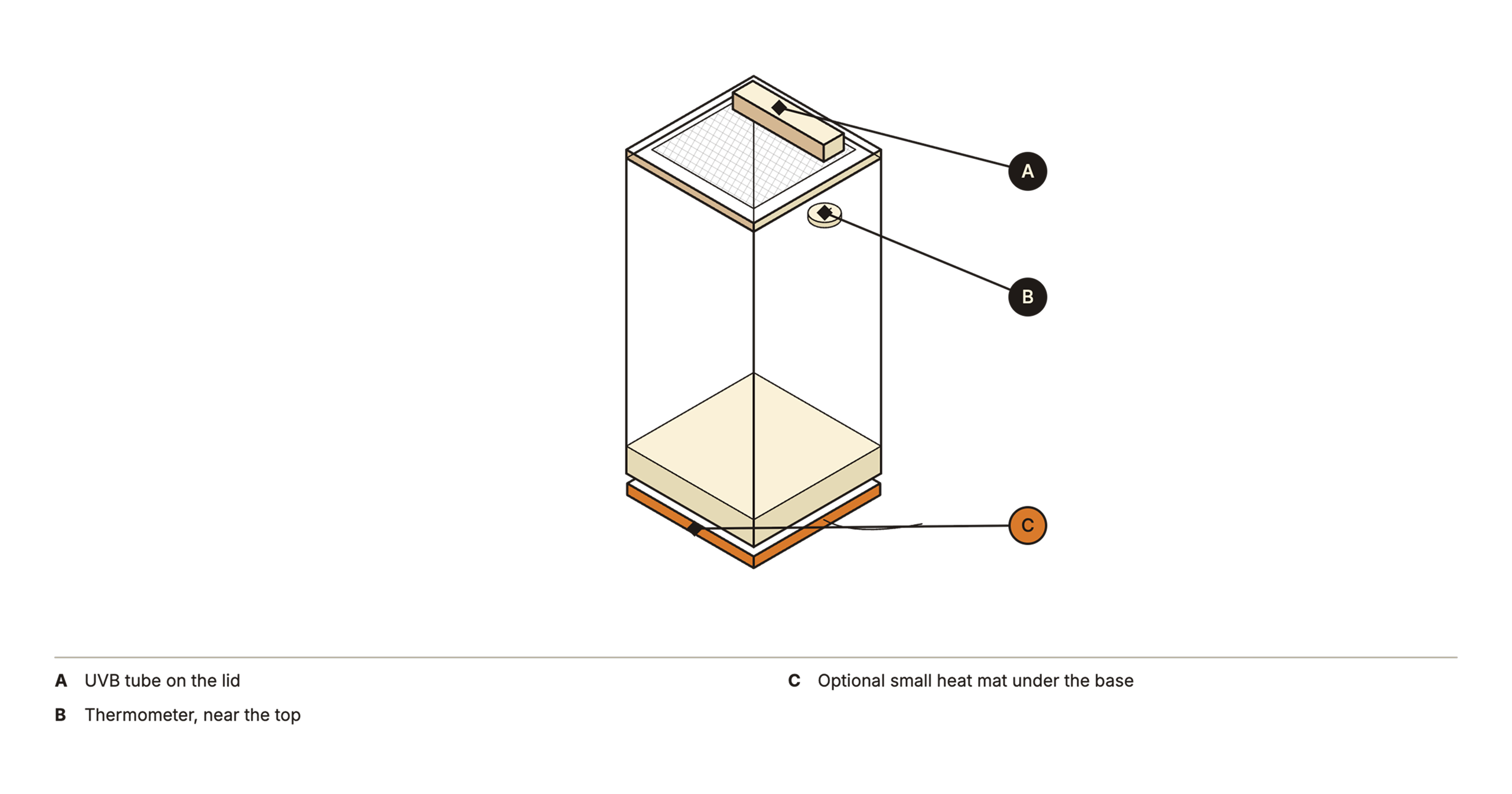
inside enclosure
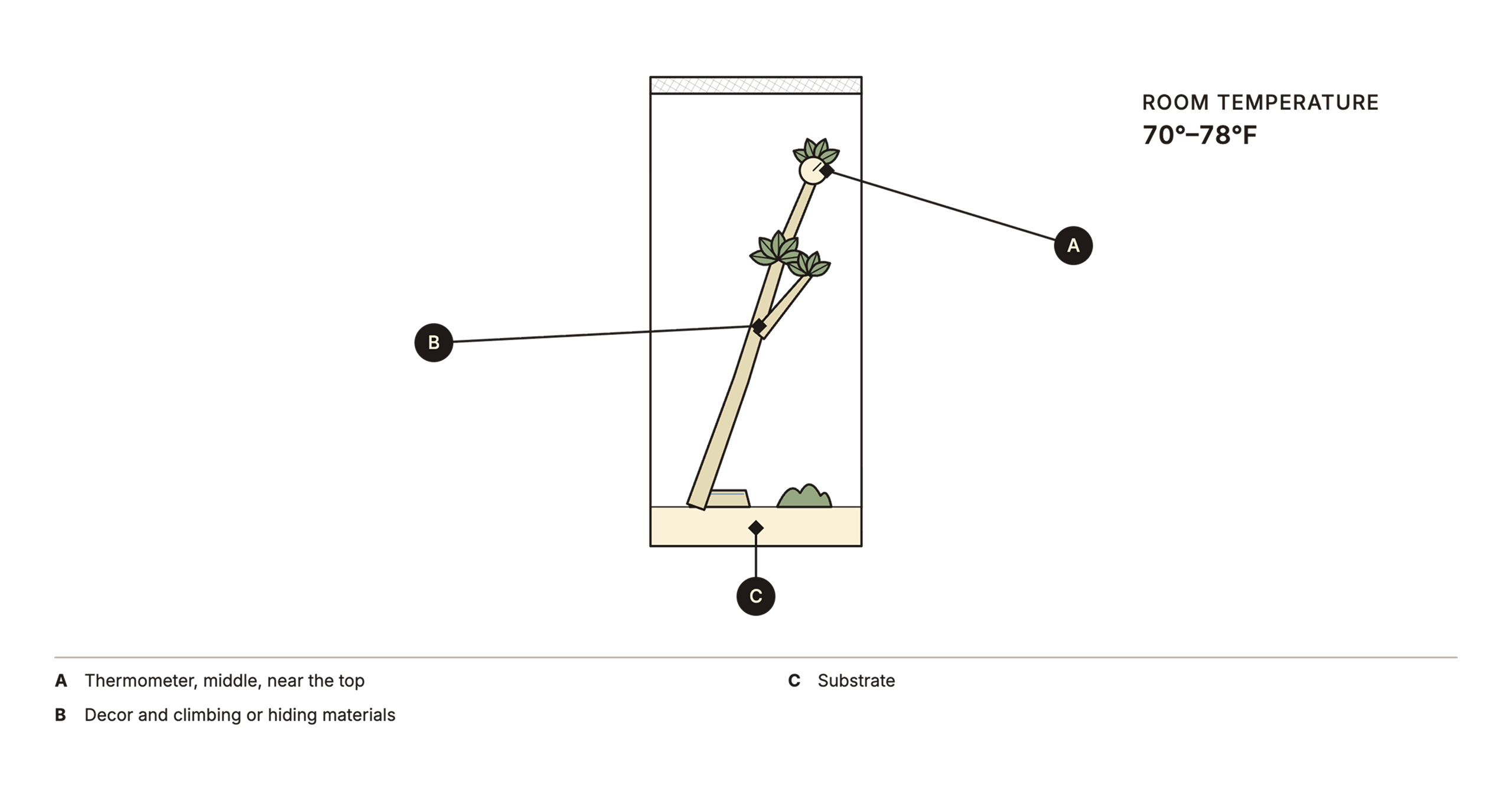
FAQ
My spider hasn't eaten in weeks. Is that normal?
Jumping spiders can go up to 20 days without eating. The usual reasons are an upcoming molt or not enough daylight in the enclosure.
What should I do while it molts?
Remove any food left in the enclosure and keep misting; spiders come out to drink.
How do I know my spider is about to molt?
It stops eating, builds a thick web hammock and hides in it during the pre-molt stage.
What is molting?
As a spider grows it outgrows its exoskeleton, so it sheds the old one to make room for the new one.