Corn Snake
Pantherophis guttatus
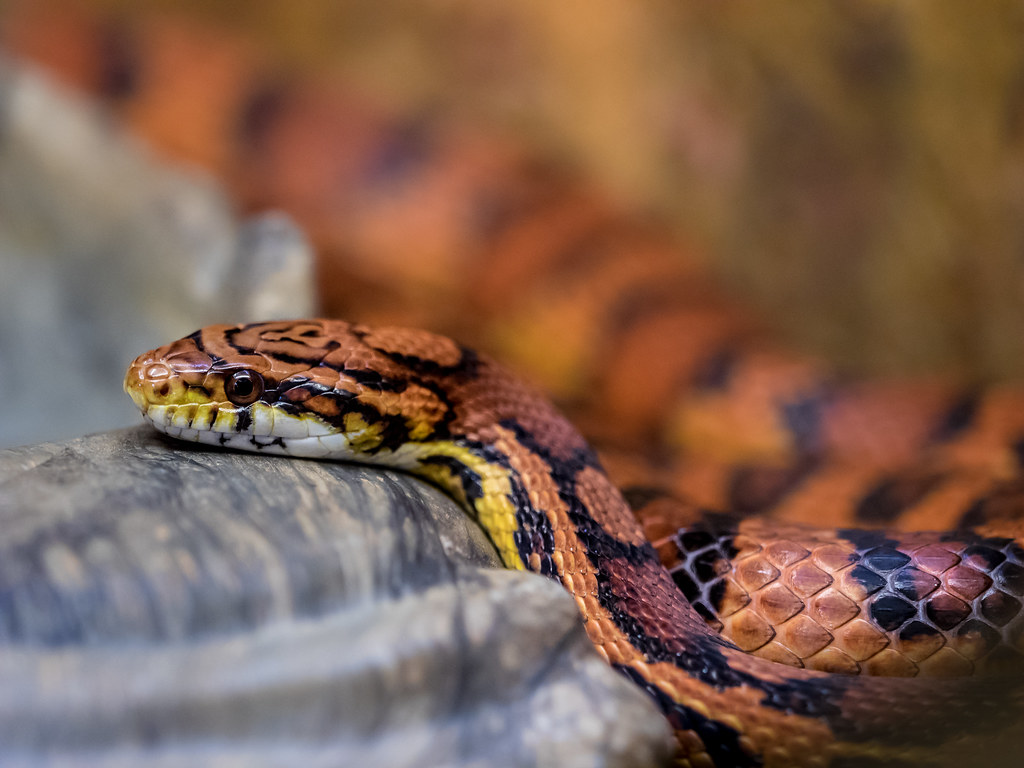
Corn snakes are a stunning colubrid snake native to the southeastern and central United States. A staple in herpetoculture, the corn snake is often recommended as a great first pet snake.
temperature
Reptiles are cold blooded - they must utilize their environment to properly regulate their body temperature. It is critical that captive reptiles are able to both warm up, and escape the heat as they wish.
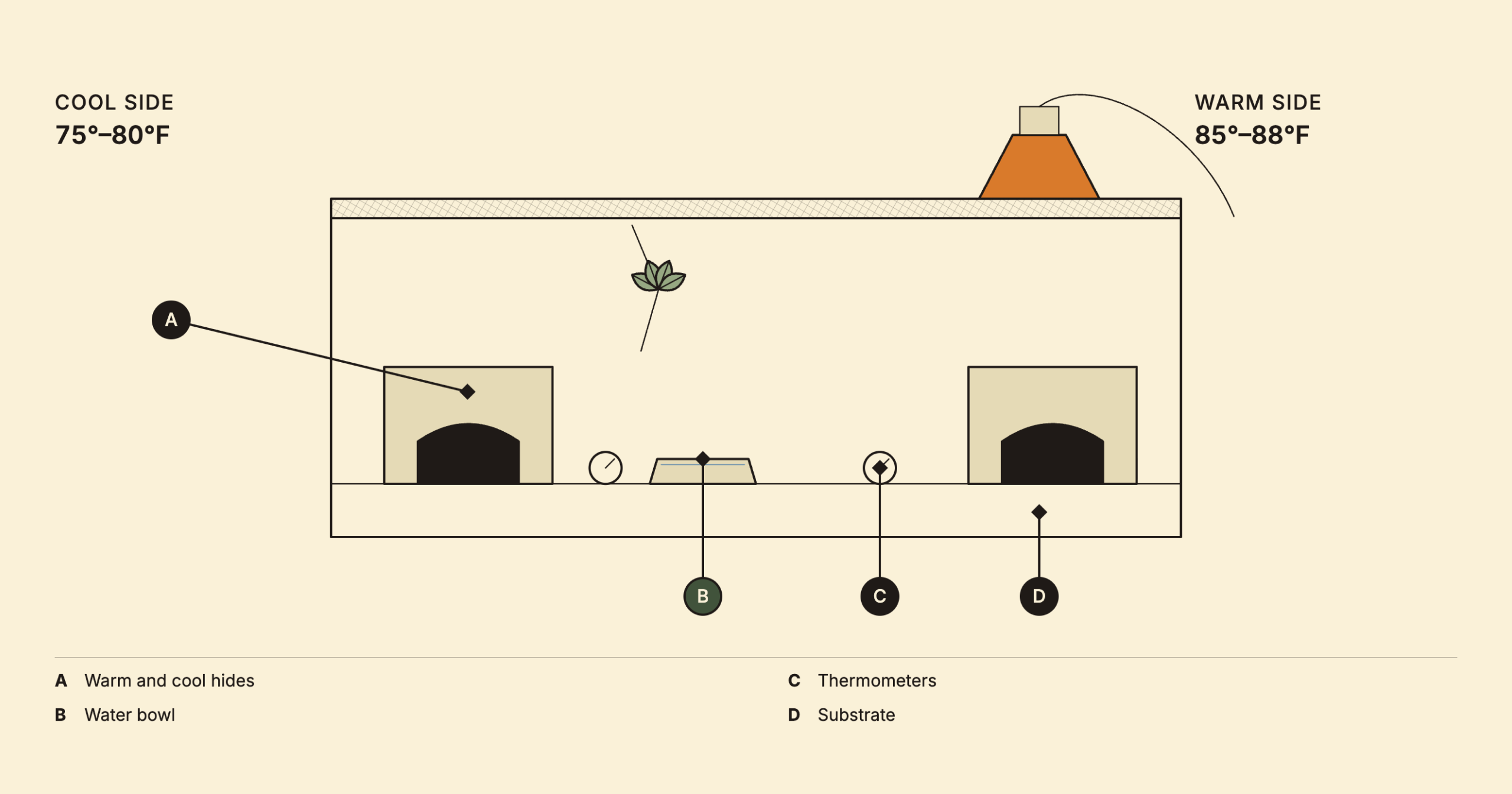
Hot side: 84°–86°F. Cool side: 75°–80°F. Evening: 65°–75°F. The thermometer should be on the ground (where the snake is!), not the wall.
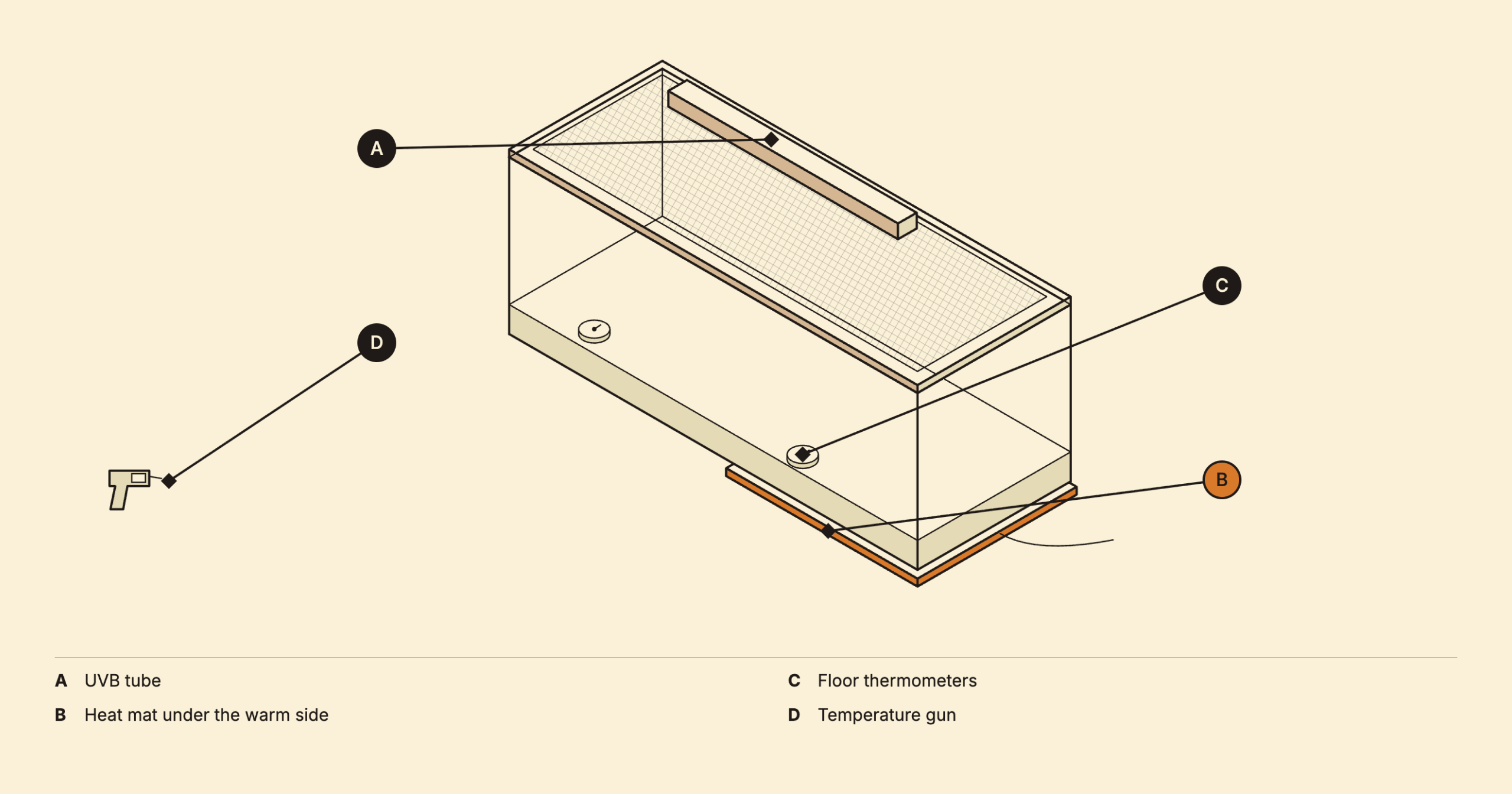
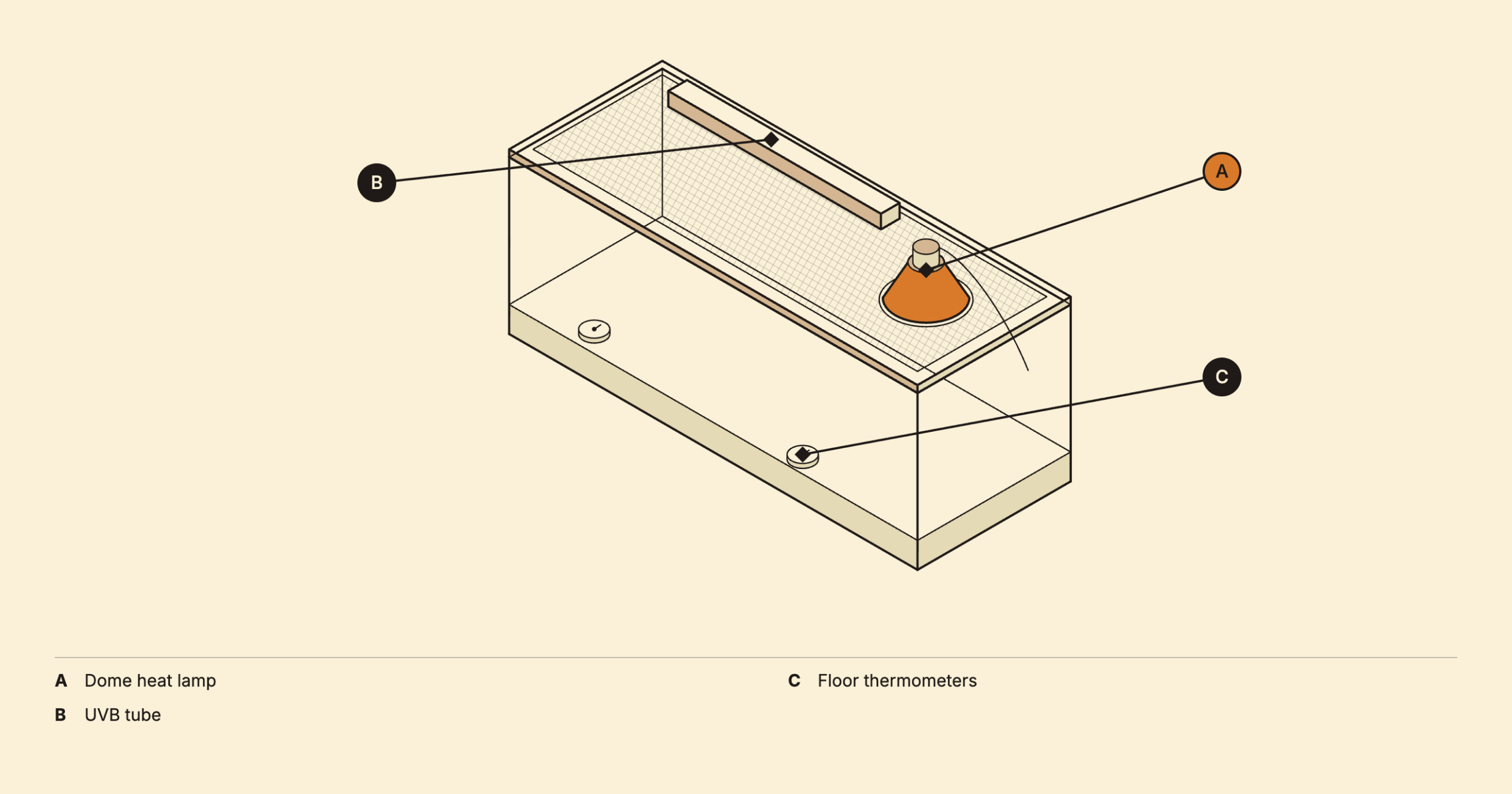
Keep thermometers on both the hot and cool side of the enclosure at all times. We strongly recommend a min/max thermometer on the cool side so you can monitor how cold overnight temperatures are getting.
If cool-side or evening temperatures drop too low, your snake may start to refuse food.
WATER & HUMIDITY
Your snake should have a water dish large enough to curl up in and submerge its entire body, deep enough that water remains after the animal climbs out.
Humidity requirements vary species to species. In general, it is beneficial to provide a "humid hide" for your corn snake. A humid hide is an enclosed space (hide box, Tupperware container, etc.) with a snake-sized entry point filled with a damp substrate, often sphagnum moss. This allows you to offer your snake a moist microclimate without overly saturating the entire enclosure.
Enclosure
Provide a minimum of two tight-fitting hides; one on the warm side and one on the cold side. Other mindfully placed decor may be used to make the enclosure aesthetically pleasing and enriching for the snake.
Enclosures made from PVC, wood, melamine, and standard glass 'aquarium-style' can all be good options so long as environmental requirements are met. Solid top enclosures are useful in that they retain heat and/or humidity; if using a screen top enclosure, consider covering up the mesh to prevent heat and moisture loss. Enclosures must be escape-proof: secure screen tops with reptile cage clips and put the drop pin in sliding tops.
Enclosure sizing needs vary by species and their average size range. As a handy rule of thumb: the enclosure's length + width should be equal to or in excess of the snake's length.
Substrate and Decor
There are many good options for substrate for colubrid snakes: pine shavings, aspen shavings, Repti-Soil, Bio Active Supply substrates, Forest Floor, Eco Earth and more can all work well.
general info
Corn snakes typically average lengths of 2.5 - 3.5 feet. They maintain a slender build and stay a manageable size throughout their life. In the wild, this species inhabits a diverse range of habitats including woodlands, forest margins, agricultural fields, and urban areas. These rodent specialists gained their name due to their association with cornfields where mice are aplenty.
Corn snakes have been bred to boast an incredible diversity in color and pattern - there truly is a flavor for everyone!
DIET & feeding
Prey should be approximately the same thickness as the thickest part of your snake. We recommend feeding frozen/thawed rodents when possible, as a live rodent can injure or kill a snake with sharp teeth and claws.
Metabolic rates and food requirements vary by species. As a general rule, most keepers feed baby corn snakes once every 5-7 days. The rate of feed should be reduced when the snake reaches adulthood. Corn snakescan maintain healthy size and weight while eating an appropriately sized prey item once every 10-14 days.
Overfeeding and obesity can cause poor health in all captive snakes; keepers should feed mindfully and with health and longevity in mind.
LIGHTING
Regulate your colubrid's day/night cycle using lighting on a timer. For regular care, a 12 hours on, 12 hours off light cycle works well for most species.
While UVB lighting is not required for snakes to survive, there is growing evidence that exposure to UVB lighting may be beneficial for the health of your snake. If you choose to offer UVB, it should be offered as a gradient similar to heat so that the snake can limit exposure as it desires.
bottom heat option
top heat option
Inside Enclosure