Brazilian Rainbow Boa
Epicrates cenchria
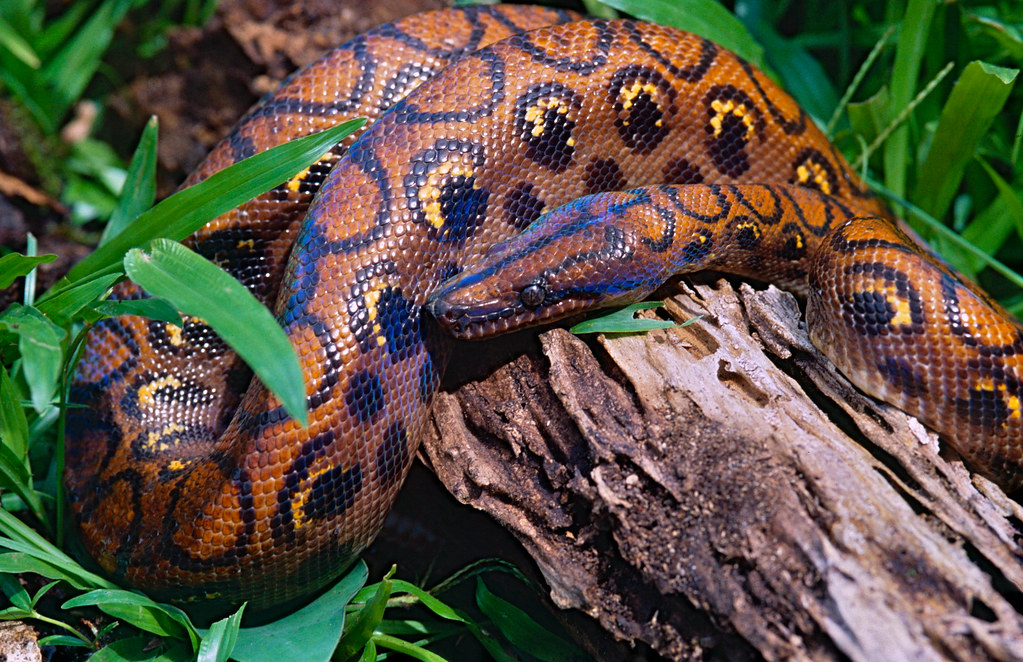
The Brazilian rainbow boa is often included in discussions of the most beautiful snakes on earth. These boas feature gorgeous orange-red tones, rich iridescence, and unique black rings on the dorsal.
temperature
Reptiles are cold blooded - they must utilize their environment to properly regulate their body temperature. It is critical that captive reptiles are able to both warm up, and escape the heat as they wish.
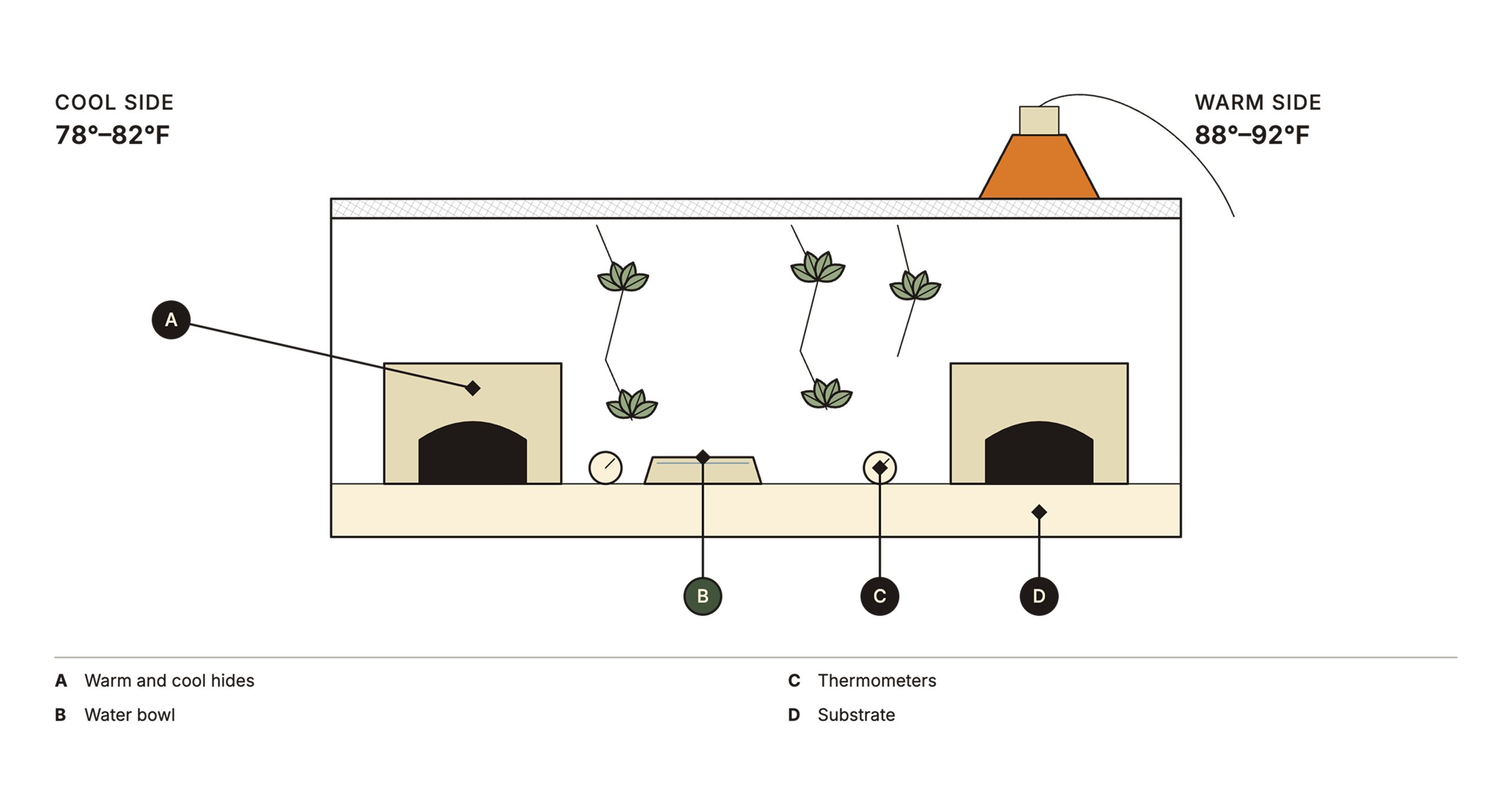
Hot side: 88°–92°F. Cool side: 78°–82°F. Evening: 70°–75°F. The thermometer should be on the ground (where the snake is!), not the wall.
Keep thermometers on both the hot and cool side of the enclosure at all times. We strongly recommend a min/max thermometer on the cool side so you can monitor how cold overnight temperatures are getting.
If cool-side or evening temperatures drop too low, your boa may start to refuse food.
WATER & HUMIDITY
Your snake should have a water dish large enough to curl up in and submerge its entire body, deep enough that water remains after the animal climbs out.
Brazilian Rainbow Boas thrive with humidity around 70-80%. Humid hides can be utilized to offer the snake moist microclimates rather than keeping the entire enclosure moist. A humid hide is an enclosed space (hide box, Tupperware container, etc.) with a snake-sized entry point filled with a damp substrate, often sphagnum moss.
Enclosure
Provide a minimum of two tight-fitting hides; one on the warm side and one on the cold side. Other mindfully placed decor may be used to make the enclosure aesthetically pleasing and enriching for the snake.
Enclosure sizing needs vary by species and their average size range. As a handy rule of thumb: the enclosure's length + width should be equal to or in excess of the snake's length.
Brazilian rainbow boas can be successfully maintained in a variety of enclosure types, but this species is best maintained in enclosures that hold humidity well. Enclosures made from PVC and standard glass 'aquarium-style' are good options- wood and melamine do not hold up well with high moisture over the long term. Solid top enclosures are useful in that they retain heat and humidity; if using a screen top enclosure, consider covering up the mesh to prevent heat and moisture loss. Enclosures must be escape-proof: secure screen tops with reptile cage clips and put the drop pin in sliding tops.
Substrate and Decor
Repti-Soil, Bio Active Supply substrates, Forest Floor cypress mulch, Eco Earth coco fiber, and more all work and help hold your boa's humidity.
general info
The Brazilian rainbow boa is native to the forests and savannas of the Amazon basin in South America. These medium-sized boas average lengths of 4 to 6 feet and can live in excess of 30 years in captivity. Brazilian rainbow boas are semi-arboreal; they will take advantage of vertical opportunities in captivity if given. These snakes do best with high humidity, they can have trouble shedding appropriately without it.
DIET & feeding
Prey should be approximately the same thickness as the thickest part of your snake. We recommend feeding frozen/thawed rodents when possible, as a live rodent can injure or kill a snake with sharp teeth and claws.
Metabolic rates and food requirements vary by species and age. As a general rule, most keepers feed baby boas once every 7 days. The rate of feed should be reduced when the snake approaches adulthood. Many boas can maintain healthy size and weight while eating an appropriately sized prey item once every ~14 days.
Overfeeding and obesity can cause poor health in all captive snakes; pythons and boas are particularly susceptible due to their slower metabolic rates. Keepers should feed mindfully and with health and longevity in mind.
LIGHTING
Regulate your boa's day/night cycle using lighting on a timer. For regular care, a 12 hours on, 12 hours off light cycle works well for most species.
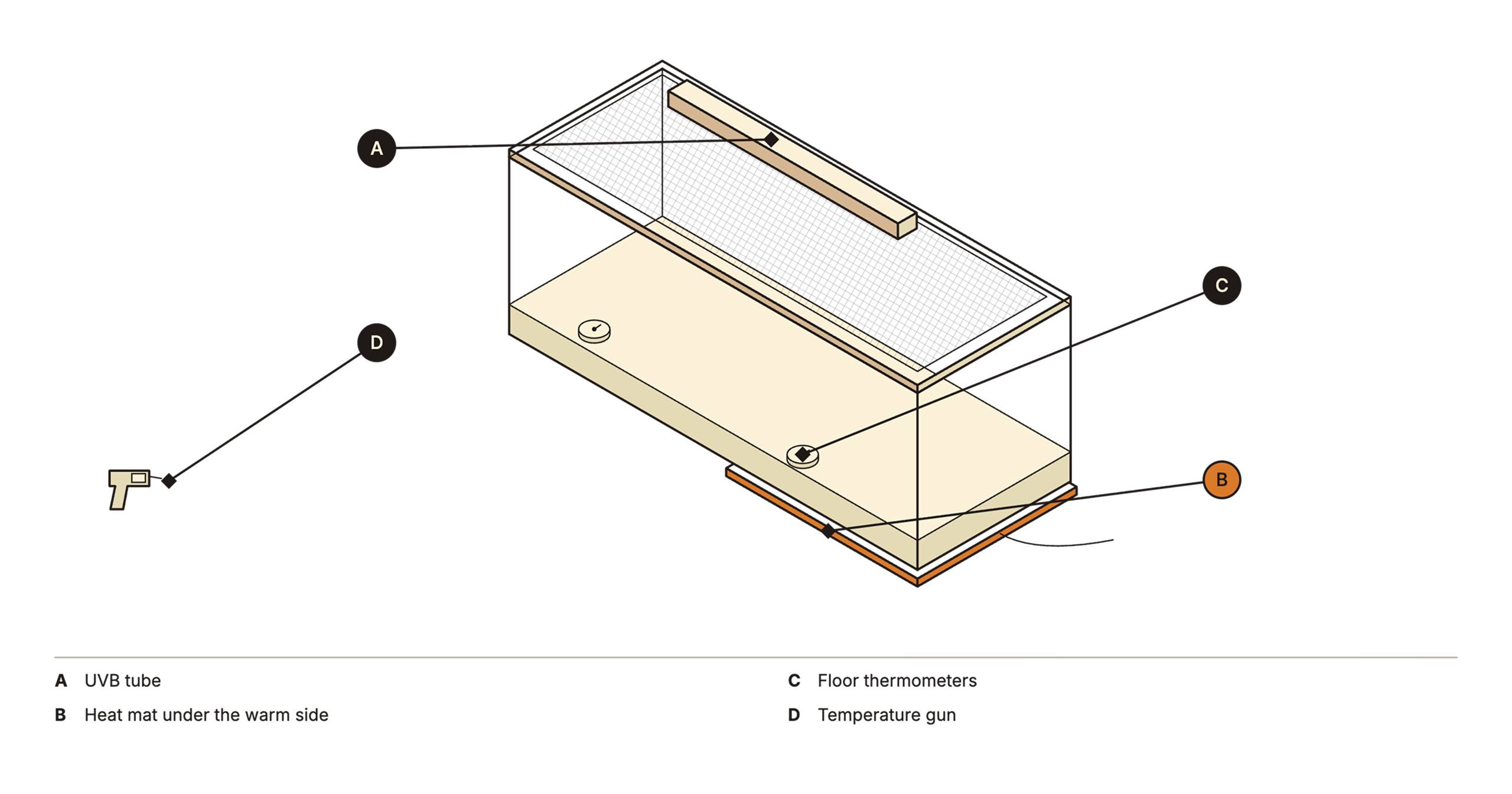
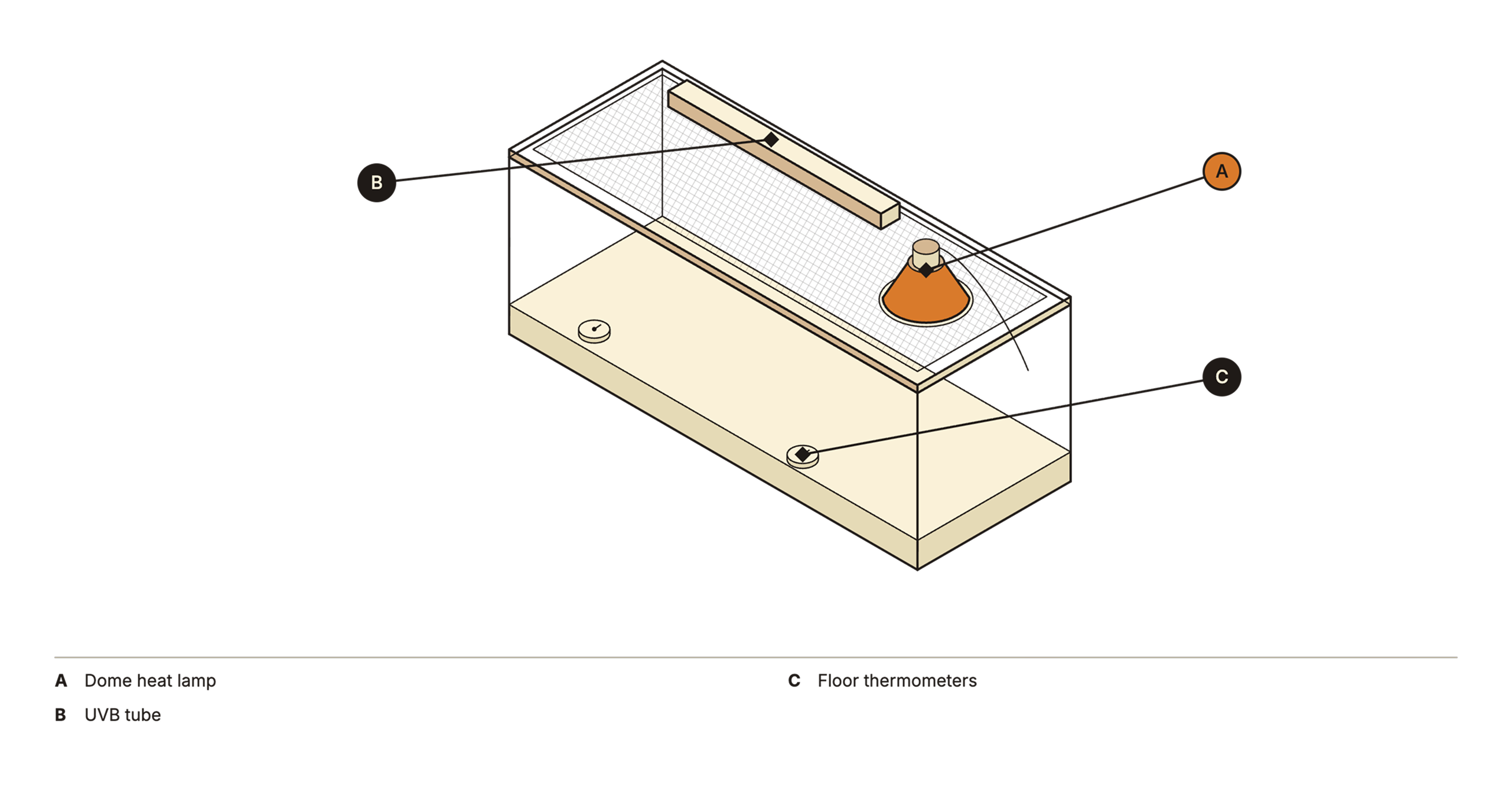
While UVB lighting is not required for boas to survive, there is growing evidence that exposure to UVB lighting may be beneficial for the health of your snake. If you choose to offer UVB, it should be offered as a gradient similar to heat so that the snake can limit exposure as it desires.
bottom heat option
top heat option
Inside Enclosure