Bearded Dragon
(Pogona Vitticeps)
This is a very general care sheet. We strongly recommend gathering as much information as possible on captive husbandry for your specific species of bearded dragon: other keepers in online groups and forums, care sheets, books and YouTube videos.
temperature
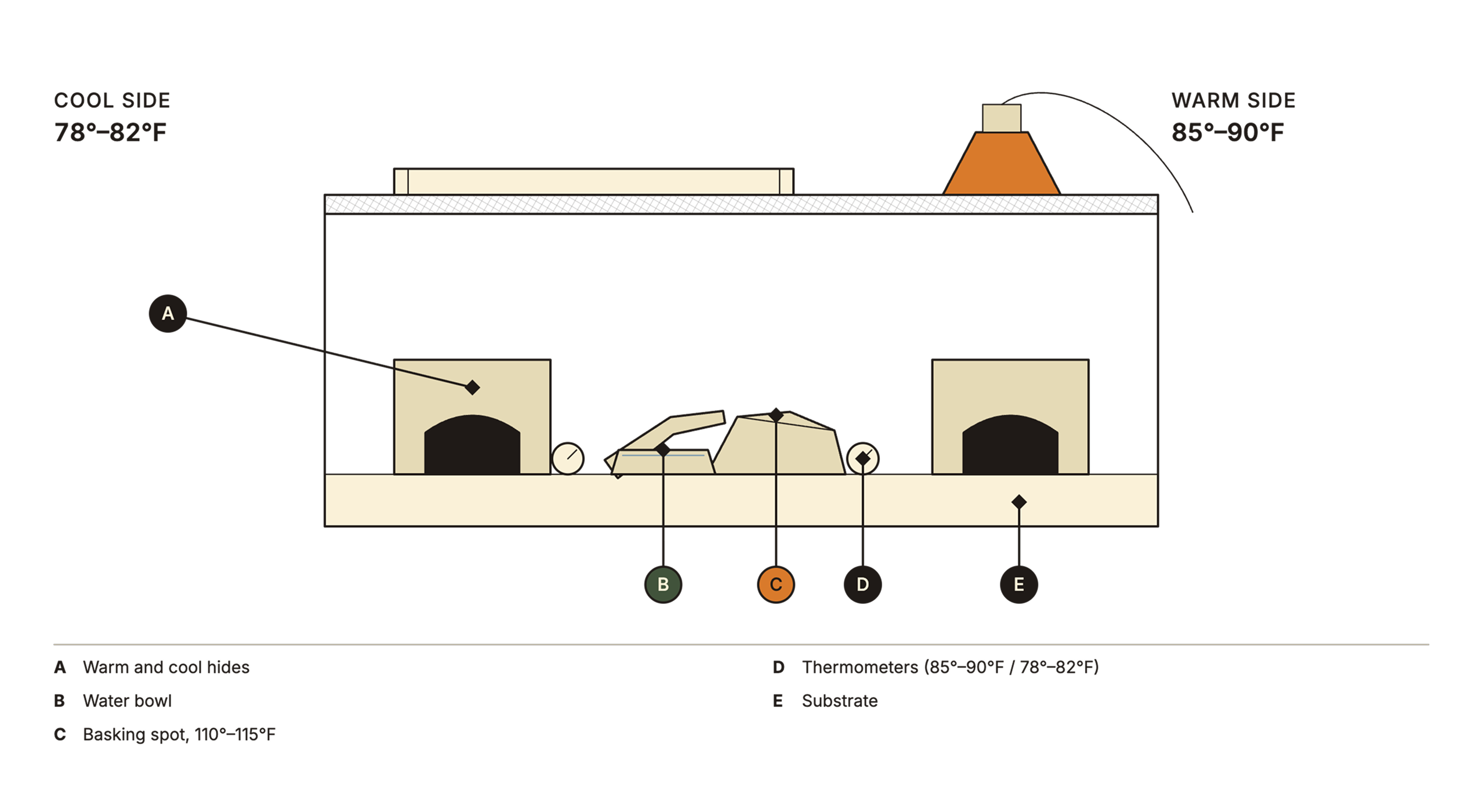
Basking (surface temp.): 110°–115°F, measured with a temperature gun. Hot side: 85°–90°F. Cool side: 78°–82°F. Evening: 75°–78°F. Thermometer on the ground, not the wall.
Keep thermometers on both the hot and cool side of the enclosure at all times. We strongly recommend a min/max thermometer on the cool side so you can monitor overnight temperatures.
If the enclosure drops below these temperatures, a bearded dragon may start to brumate (hibernate) and stop eating; it thinks winter is coming.
WATER & HUMIDITY
Spraying your animal and its environment is one of the most efficient ways to keep it hydrated. The ideal time is in the morning, about an hour after the daytime lights come on. Avoid spraying in the hour or two before lights-out. Veggies can also be lightly misted to add moisture.
Most dragons don't readily drink from a dish, but keep a water dish on the cool side at all times anyway. Some owners also soak their dragons weekly in a tub of lukewarm water.
shelter & cage size
Baby/juvenile: floor space of 12 by 24 inches. Once the animal is longer than a third of the enclosure, size up.
Adult: floor space of 3 by 2 feet minimum; 4 by 2 feet preferred.
Place a hide on the warm side and a hide on the cool side.
SUBSTRATE
Dragons under 6 inches total length should be kept on paper towels or newspaper to avoid impaction. Larger animals can be kept on a sand and soil mix that emulates their natural environment.
Impaction typically occurs when the animal isn't kept at proper temperatures or has an underlying issue, so holding temperatures in range at all times is vital. A lack of proper minerals can also lead dragons to eat substrate.
DIET & feeding
Bearded dragons are omnivores and need both live insect prey and plant matter. Young dragons eat mostly insects and gradually skew toward vegetation as they mature.
Live food: crickets and Dubia roaches are the common feeders for young dragons. Prey must be smaller than the width between the eyes, and more small items beat fewer large ones. As dragons grow, add variety: king mealworms, hornworms, silkworms, wax worms. Gut-load all feeders by feeding them healthy items for 24 hours before offering them; that nutrition passes to your dragon.
Veggies: leafy greens, fresh vegetables, edible flowers and fruit in moderation. Avoid avocado, citrus, mushrooms, spinach, Swiss chard, onions, rhubarb and beet tops.
Baby/juvenile: insects 4 to 5 times a week, veggies 2 to 3 times a week.
Adult: 2 to 3 times a week.
supplements
Even gut-loaded insects can't match what a wild dragon eats, so supplement with a calcium + D3 supplement and a multivitamin. Lightly dust the insects beforehand in a bag or plastic container.
LIGHTING
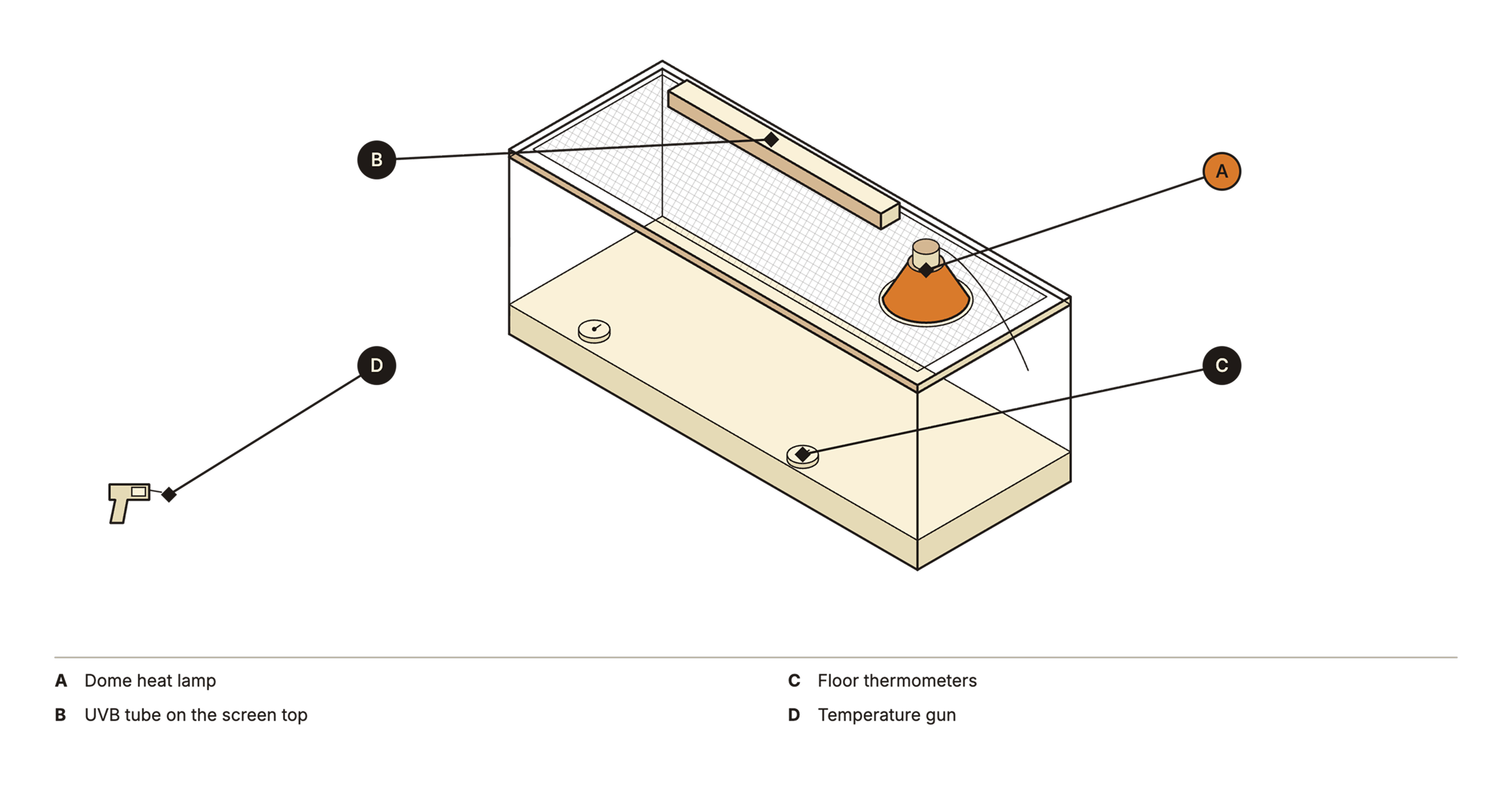
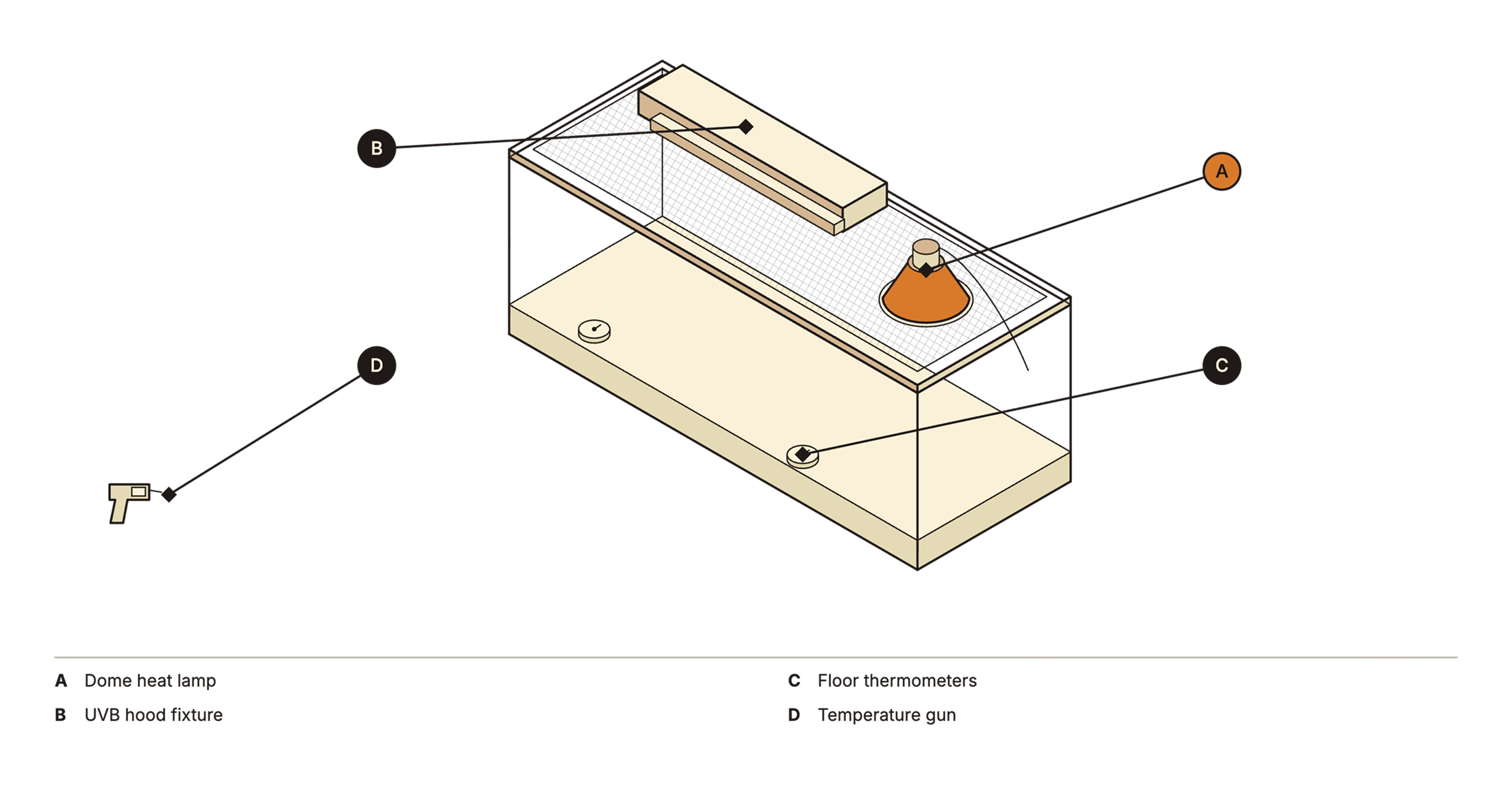
UV lights on 12 hours a day and off 12 hours a night to simulate day and night. UVB is critical for proper bone growth; we recommend a 10.0 UVB fluorescent with as much coverage as possible.
Arrange furniture so the dragon can get within 10 inches of most UVB bulbs. Replace UVB bulbs every 6 months (they emit less UV over time) and write the purchase date on the bulb.
medical concerns
EastBayVivarium.com has several Bay Area reptile vets listed, a nationwide reptile vet search and emergency vet information if your animal is having a medical issue.
lighting option 1
lighting option 2
Inside Enclosure