
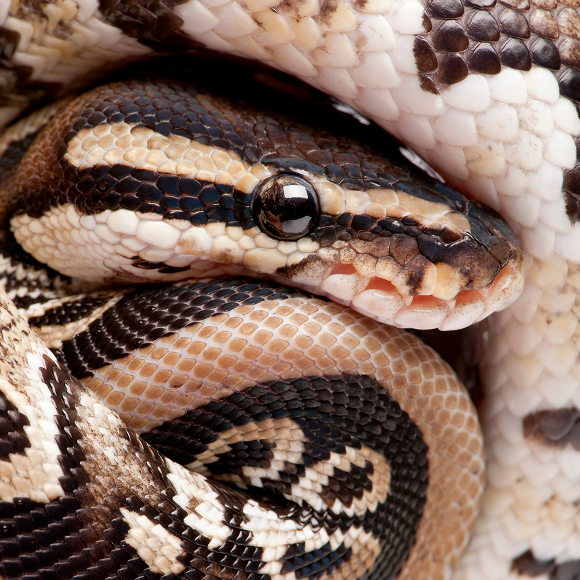
Ball Python
(PYTHON REGIUS)
This is a general care sheet and we strongly encourage gathering more information regarding captive ball python husbandry. A great way to gather this information is to connect with other keepers online in social media groups and hobbyist forums, YouTube videos, and online care sheets. The more information you have, the happier the snake will be.
temperature
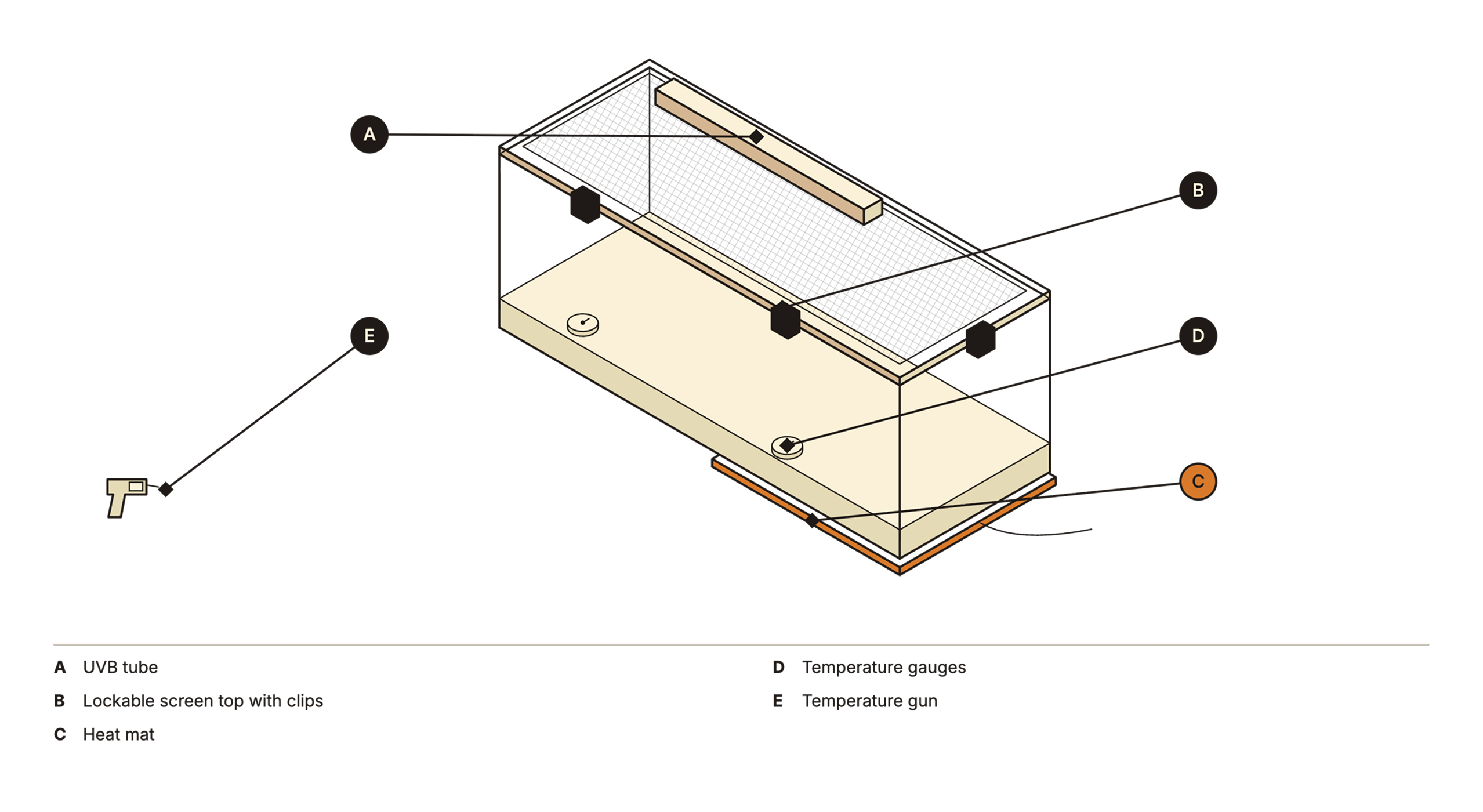
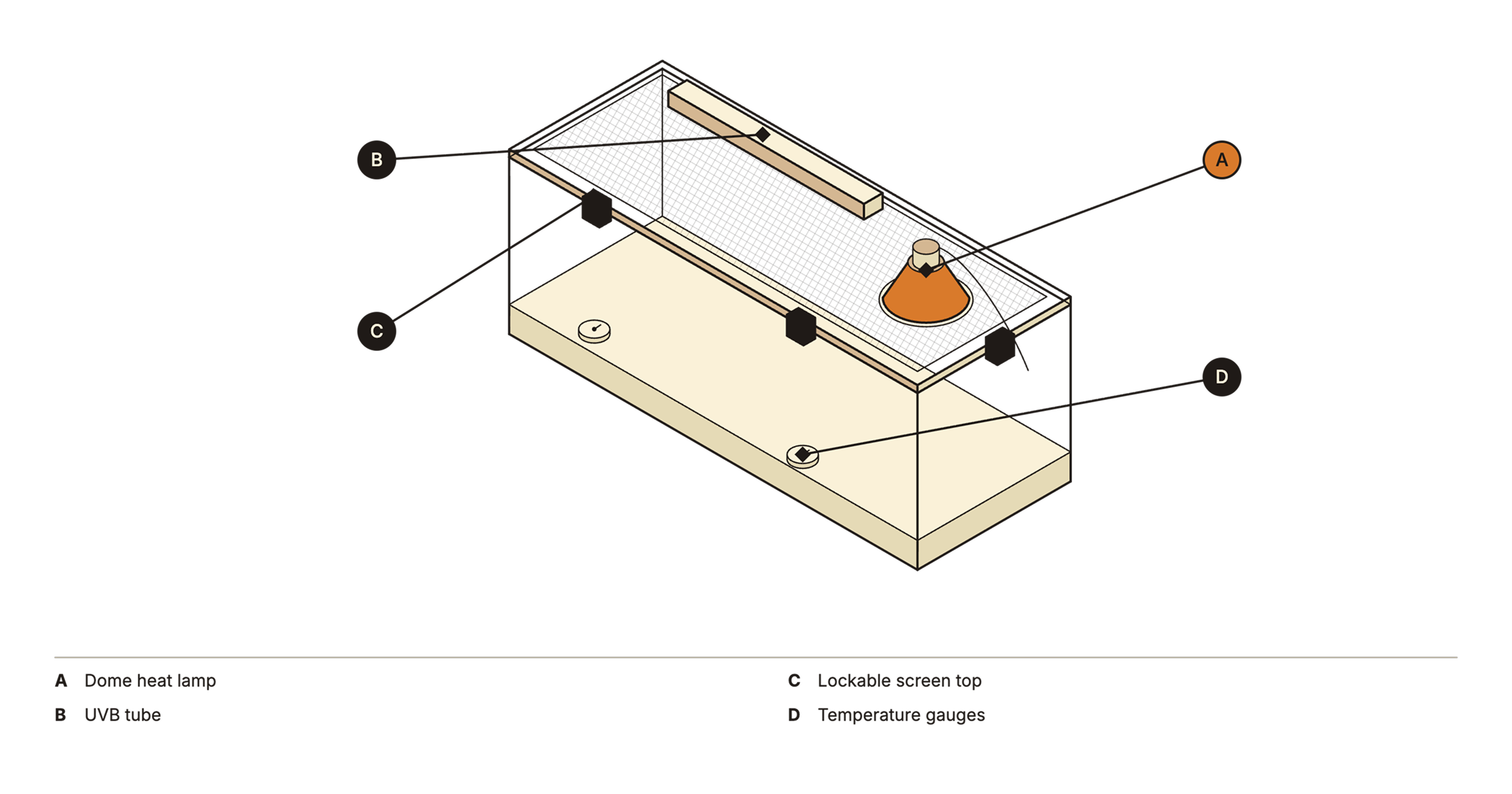
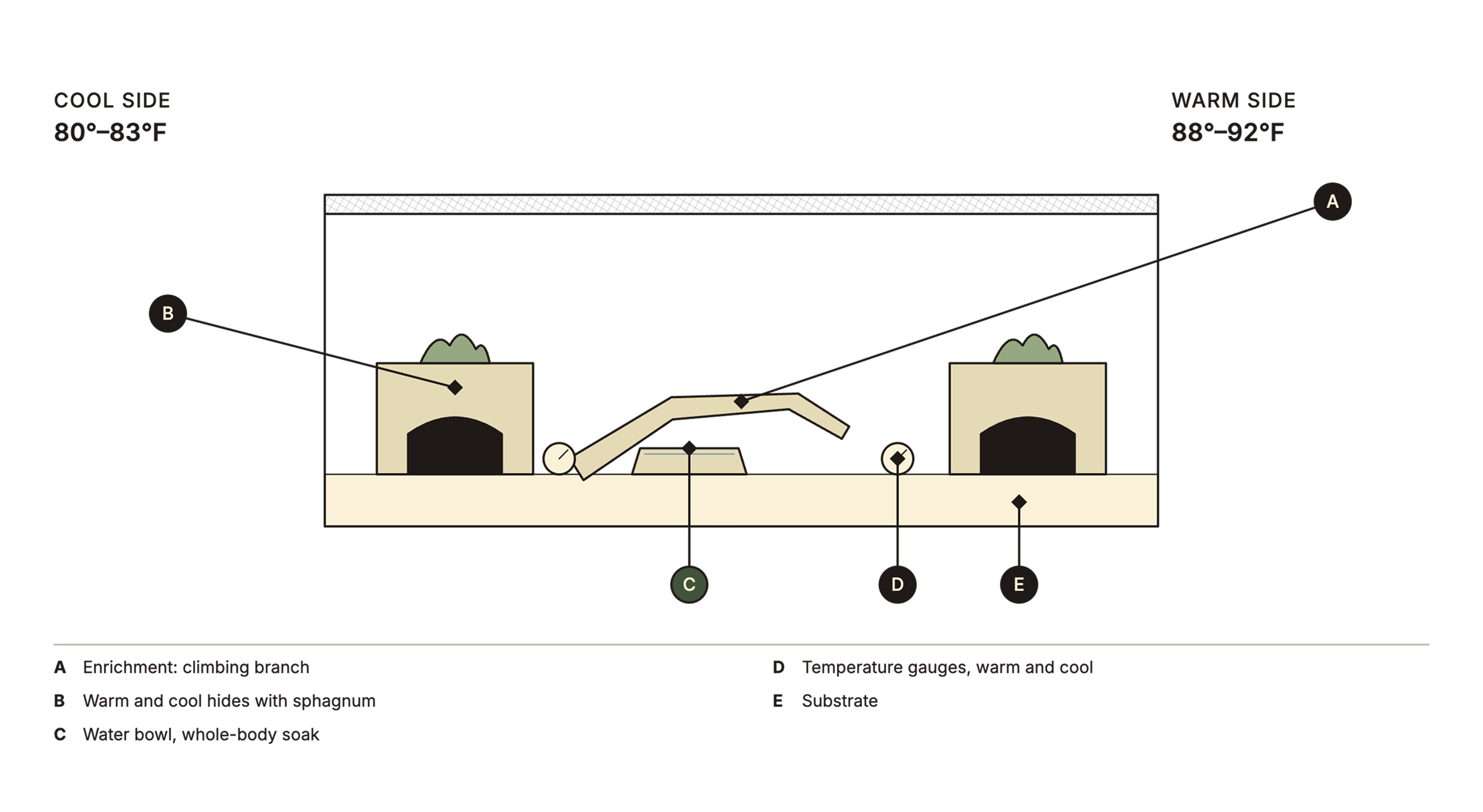
Hot side: 88°–92°F. Cool side: 80°–83°F. Evening: 78°–82°F. Thermometer on the ground, not the wall. In colder months you can cover the top of a screen enclosure with aluminum foil to trap heat, or consider a closed-top enclosure.
Keep thermometers on both the hot and cool side of the enclosure at all times.
If cool-side or evening temperatures drop below these, your snake may start to refuse food.
WATER & HUMIDITY
Your ball python should have a water dish large enough to curl up in and submerge its entire body.
shelter & cage size
Keep a hide on both the hot and cool side of the enclosure, ideally tight-fitting. Make the hides humid by occasionally misting the substrate inside them; that keeps your snake hydrated and its sheds complete. Always check the tail tip and eyes, the most problematic shed areas.
Baby/juvenile: floor space of 24 by 12 inches.
Adult: 36 by 24 inches minimum.
Adults especially do best with a solid top, which holds heat and humidity.
Screen tops should be lockable; make the enclosure escape-proof with clips or a lock.
SUBSTRATE
The most popular substrate is Forest Floor, a cypress mulch mix; it can be mixed with Eco Earth. Our Bioactive Supply Grassland mix is also preferred for the humidity it holds.
DIET & feeding
Feed a rodent roughly the same girth as your snake at its widest point. Transition your snake to thawed frozen rodents; a live rodent can injure or kill a snake.
Feeding schedule.
Baby/juvenile: hopper or adult mouse, or rat pup, every 5 to 7 days.
Juvenile to sub-adult: rats every 7 to 10 days.
Adults: rats every 10 to 14 days.
If enclosure temperatures drop below our listed lows, your snake may go off feed. Sexually mature males often go off feed for months in breeding mode; that's not a concern as long as the snake isn't visibly losing weight or muscle tone.
LIGHTING
For daytime lighting: 12 hours on, 12 hours off. UVB optional; if used, 5.0 or lower.
medical concerns
We recommend a vet visit once a year, but with appropriate and consistent husbandry you shouldn't need one unless unforeseen health issues arise.
Health concerns: tumors, cysts, eye infections, rapid weight loss, runny stools or prolonged constipation, misshapen bones, trembles, bubbling or whistling from the nose or mouth, and missing digits or toes (caused by improper sheds).
EastBayVivarium.com has several Bay Area reptile vets listed, along with a nationwide reptile vet search and emergency vet information.
Heat mat Option
Heat light option
Inside Enclosure
FAQ
How soon after feeding can I handle my snake?
Wait a minimum of 24 to 48 hours. Handling sooner can cause regurgitation.
My snake regurgitated. Now what?
Wait a full two weeks before feeding again, and make the next food item smaller.